







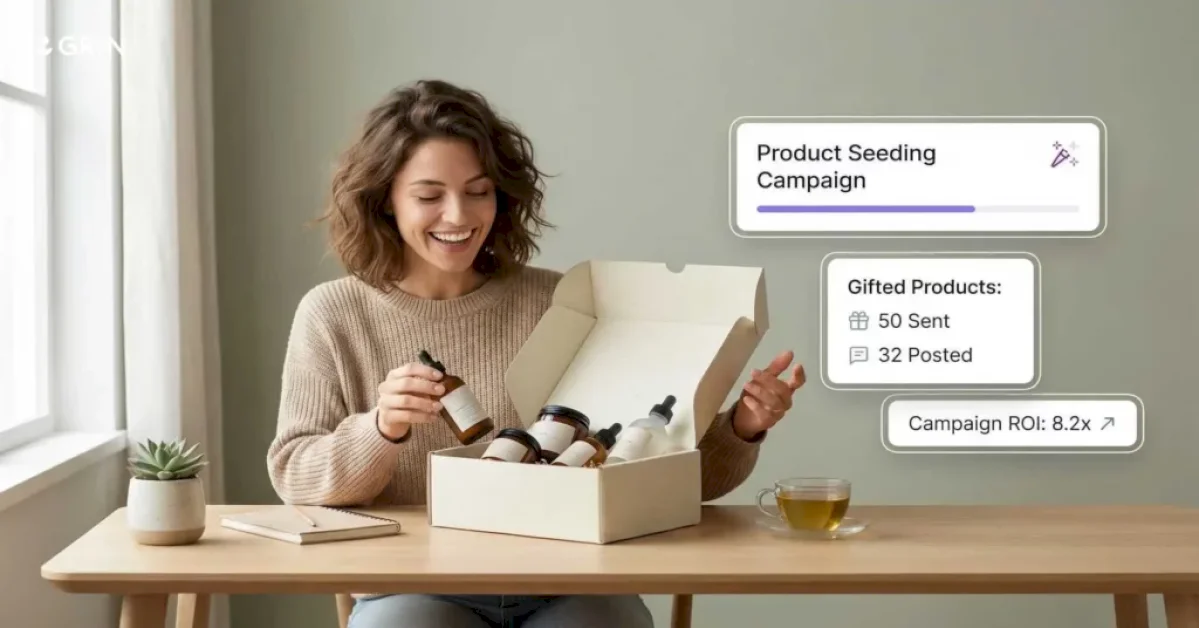
How DTC brands are using product seeding to build authentic creator relationships, generate high-converting UGC, and drive measurable revenue — without the massive upfront spend.
Product seeding isn’t new. Brands have been sending free products to influencers for years. But in 2026, the strategy has evolved from “spray and pray” into one of the highest-ROI tactics in the influencer marketing playbook.
The shift is structural: audiences are more skeptical than ever, creators are drowning in paid partnership requests, and the brands seeing the biggest returns are the ones leading with generosity instead of contracts.
Here’s how the best DTC brands are running product seeding programs that actually convert — and why the old approach of sending free stuff and hoping for a post is officially dead.
What Is Product Seeding (And What It’s Not)
Product seeding is the practice of sending free products to creators with no formal obligation to post. Unlike paid partnerships, where a brand pays a flat fee for guaranteed content, seeding relies on the quality of the product and the relationship to earn organic mentions.
This distinction matters. When a creator genuinely loves a product and shares it without being paid, their audience can tell. The content feels different — more authentic, more enthusiastic, more trustworthy. And in 2026, that trust gap between organic and sponsored content is wider than ever.
Product seeding is not a replacement for paid influencer campaigns. It’s a complementary strategy that serves a different purpose: building a foundation of authentic creator relationships that can later evolve into paid partnerships, affiliate programs, or long-term ambassador roles.
Why Product Seeding Works Better in 2026
Three macro trends are making product seeding more effective than it’s ever been:
1. Creator Fatigue With Paid Partnerships
The influencer marketing industry has matured to the point where many mid-tier creators receive dozens of paid partnership pitches per week. The result? Creators are more selective about what they promote, and audiences have developed finely tuned “ad radar” for sponsored content.
Product seeding sidesteps this entirely. A gifted product with a thoughtful note feels like a gift, not a transaction. Creators who post about seeded products do so because they want to — and that intrinsic motivation produces content that outperforms paid placements on engagement metrics like saves, shares, and comments.
2. The Rise of Micro-Creator Programs
The data is clear: micro-creators (10K–50K followers) consistently deliver higher engagement rates and better cost-per-acquisition than macro influencers. A recent analysis found that 25 micro-creators drove 4.5x more revenue than two macro creators at the same total budget.
Product seeding is the natural entry point for micro-creator programs. Sending a $30–$80 product to 100 micro-creators costs a fraction of what you’d spend on a single macro influencer — and the cumulative reach, content volume, and conversion potential is significantly higher.
3. UGC as Paid Ad Creative
One of the most powerful shifts in digital marketing is the use of creator-generated content as paid ad creative. Brands are finding that repurposed UGC from product seeding campaigns consistently outperforms studio-produced creative on platforms like Meta, TikTok, and YouTube.
The economics are compelling: a creator post that cost $40 in product can become a Meta ad that outperforms a $5,000 agency-produced asset. When you multiply that across dozens of seeded creators, you’re building a content library that fuels your paid media for months.
The Modern Product Seeding Playbook
Running a product seeding program in 2026 requires more than a spreadsheet and a shipping label. Here’s what separates high-performing programs from the ones that burn inventory with nothing to show for it.
Start With Your Existing Customers
The most underutilized tactic in product seeding is identifying creators who already purchase your products. These aren’t cold prospects — they’re genuine fans who’ve already validated product-market fit with their own wallet.
When you seed products to existing customers who also create content, the post rate skyrockets. Some platforms can now surface these creator-customers automatically through e-commerce integrations, making this approach scalable.
Personalize the Experience
Generic mass-shipments get generic results. The brands seeing 40%+ post rates are investing in personalization:
- Handwritten notes that reference the creator’s content specifically
- Curated product selections based on the creator’s niche and audience
- Unboxing experiences designed to be share-worthy
- Creator guides that provide brand context without scripting the content
Automate the Operations, Not the Relationships
Scaling a seeding program from 20 to 200 creators breaks most manual workflows. Modern creator management platforms solve this with automated workflows: claim links, delivery-triggered reminders, and content auto-capture.
The Three-to-Five Day Golden Window
Data consistently shows that the highest-converting seeding follow-ups happen 3–5 days after product delivery. Smart brands set up automated check-ins during this window — not aggressive “did you post yet?” messages, but genuine “how do you like it?” touchpoints.
Build a Seeding-to-Ambassador Pipeline
The real power of product seeding isn’t the initial post — it’s the pipeline it creates:
- Affiliate programs with commission-based compensation
- Paid partnerships with guaranteed deliverables
- Brand ambassador roles with ongoing product access
- Content licensing for paid ad creative
Measuring Product Seeding ROI
Track These Metrics
- Post rate: What percentage of seeded creators actually post? (Benchmark: 20–40%)
- Content quality score: Is the UGC good enough for paid ads?
- Engagement rate: Seeded content vs. paid partnership content
- Conversion attribution: Affiliate links, UTMs, or platform-native tracking
- Creator lifetime value: How many seeded creators convert to paid partners over 6–12 months?
The True Cost Calculation
Total Investment: Product cost + shipping + team time + platform/tool costs.
Total Return: Direct attributed revenue + UGC value + earned media value + pipeline value.
When you factor in the full return — especially UGC reuse value and pipeline conversion — product seeding typically delivers 3–8x ROI for well-run programs.
Common Mistakes That Kill Seeding Programs
Sending to Irrelevant Creators. The fastest way to waste inventory is seeding creators whose audience has zero overlap with your ICP.
No Follow-Up System. Sending products without a structured follow-up sequence is leaving money on the table.
Treating Seeding as a One-Off Campaign. Product seeding compounds over time. First round: 20% post rate. Fourth round: 40%+.
Ignoring Creator Feedback. Seeded creators who don’t post are still valuable data points for product insights.
The Bottom Line
Product seeding in 2026 isn’t about sending free stuff and crossing your fingers. It’s a systematic, data-driven strategy that — when executed well — builds authentic creator relationships, generates high-converting content, and creates a pipeline for long-term partnerships.
For DTC brands spending $10K+ monthly on influencer marketing, product seeding should be a meaningful portion of your strategy. The upfront investment is lower, the content is more authentic, and the long-term relationship value compounds in ways that paid partnerships alone never will.
Ready to build a product seeding program that scales? GRIN’s creator management platform automates the operational complexity — from creator discovery to product shipping to content tracking — so your team can focus on building genuine creator relationships.
